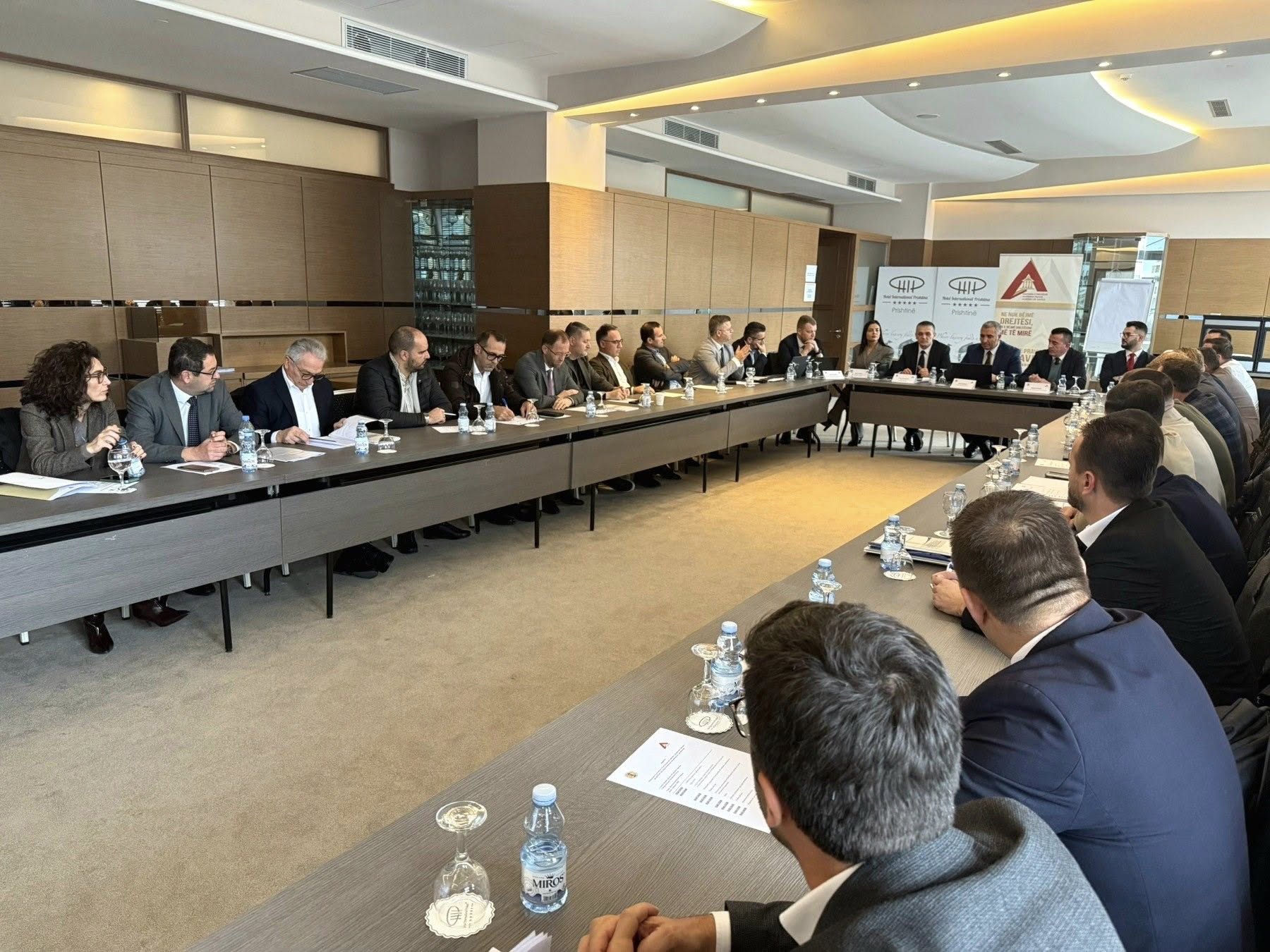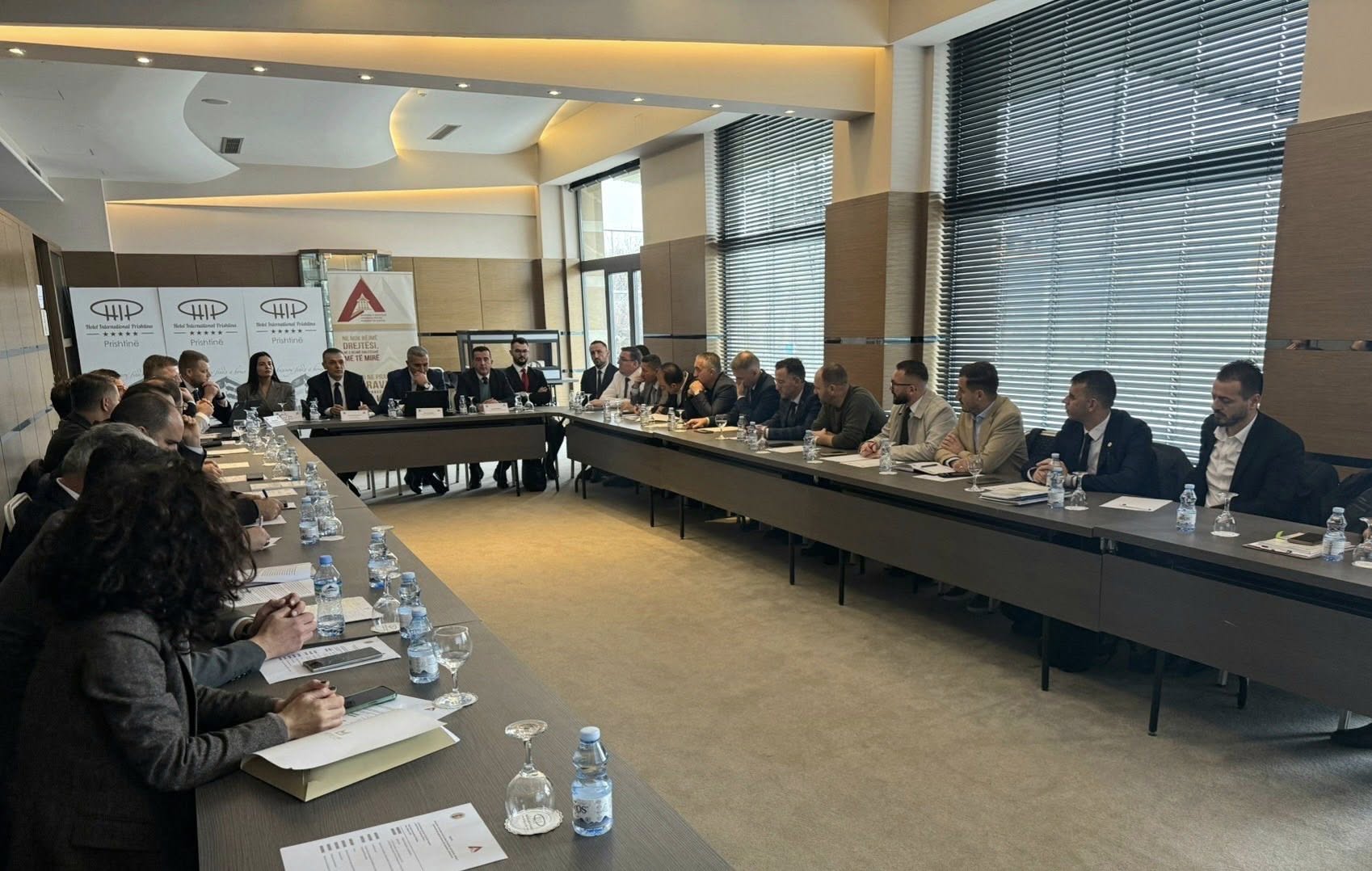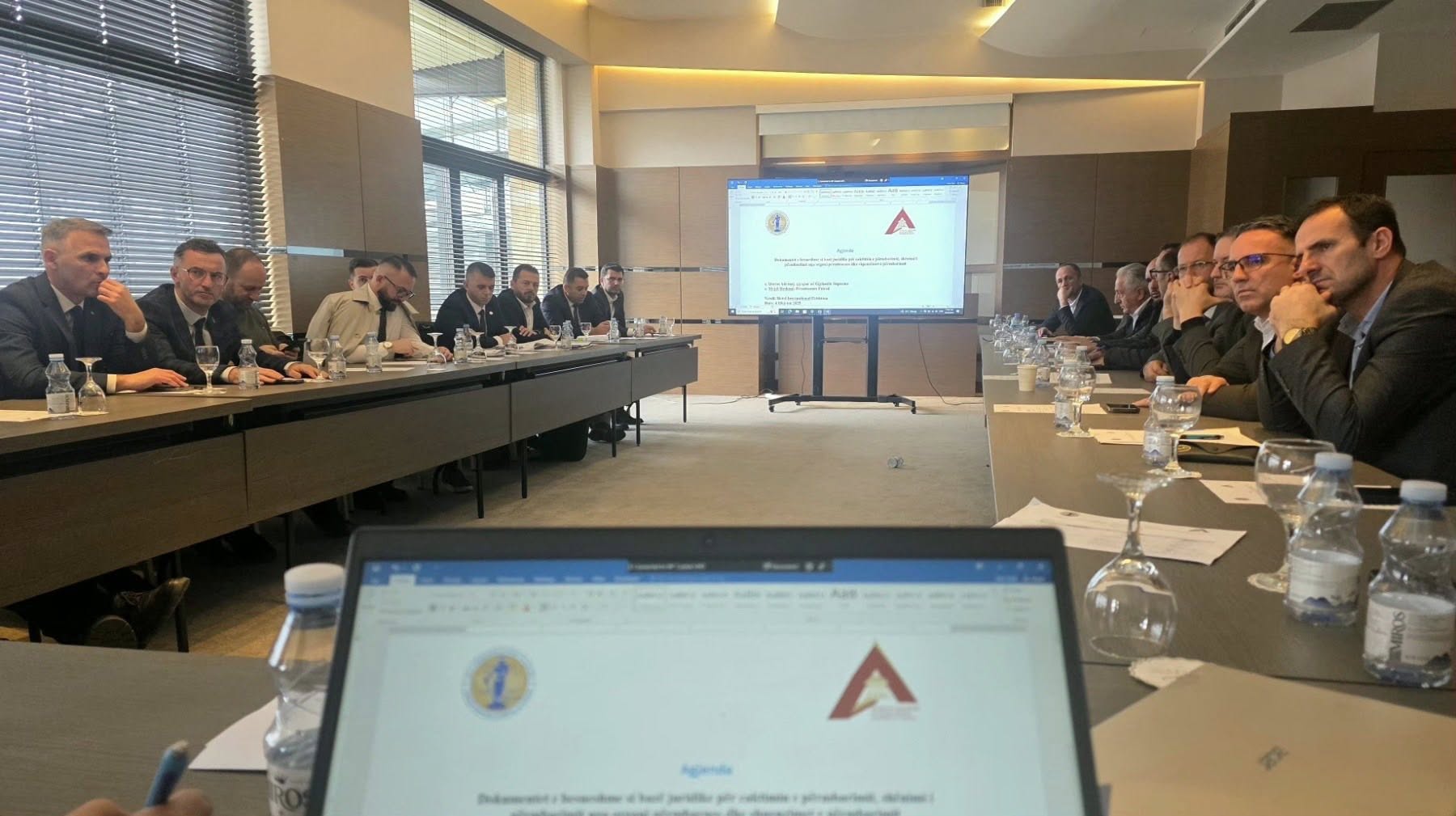
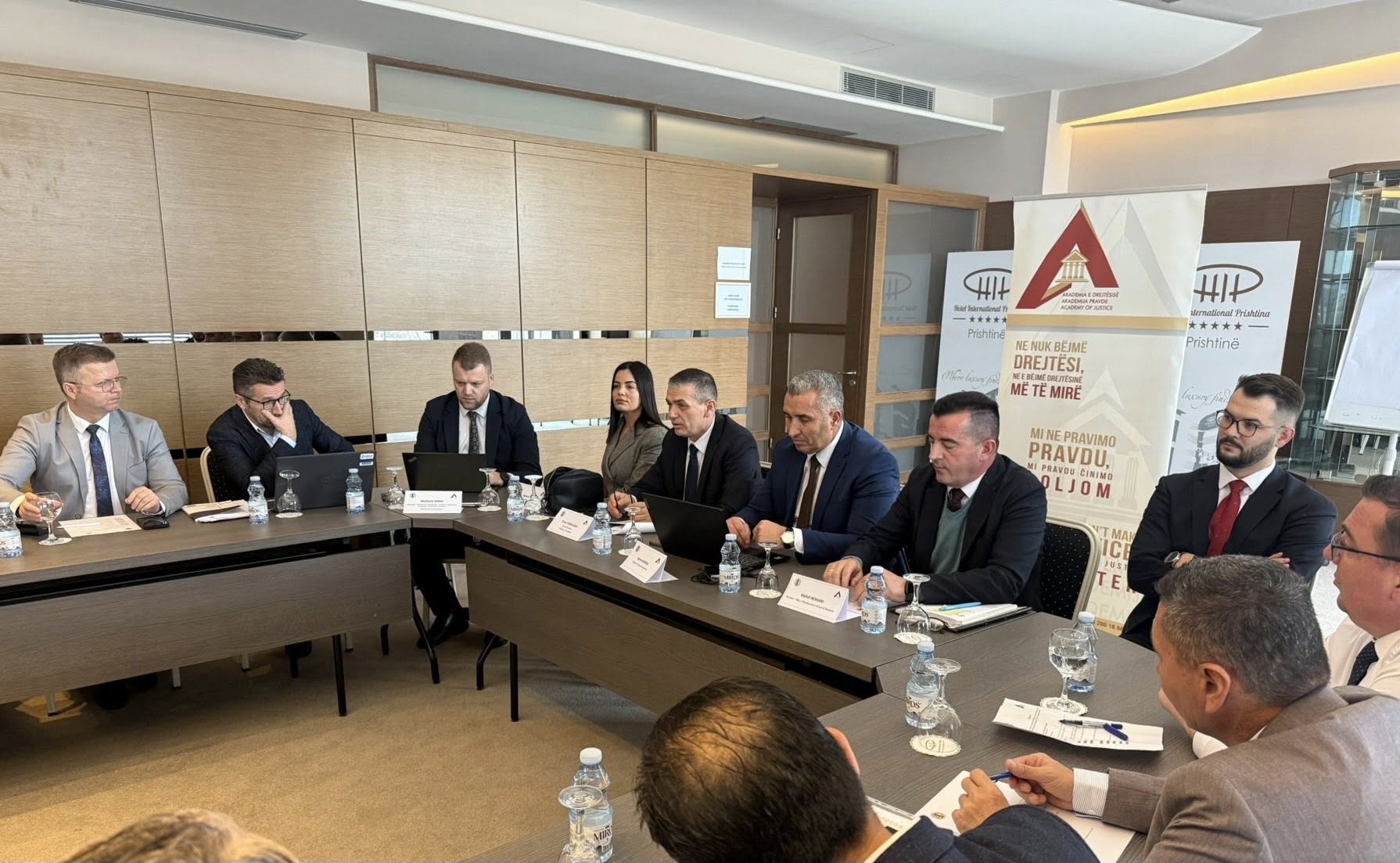
Upon the initiative of the Chamber of Private Enforcement Agents of Kosovo and with the support of the Academy of Justice, a joint workshop was held today, bringing together judges and private enforcement agents from all regions of Kosovo. The main objective of this meeting was to discuss and address topics of mutual interest, aiming at the unification of practices and increasing efficiency within the justice system.
The proceedings of this workshop were opened by the President of the Chamber of Private Enforcement Agents of Kosovo, Mr. Mehdi Reshani, and the Director of the Academy of Justice, Mr. Enver Fejzullahu. In their opening remarks, they thanked the attendees for their participation and emphasized the importance of this event for the unification of judicial procedures. Both leaders highlighted that such cooperation is vital to increasing the efficiency of enforcement procedures, ensuring legal certainty, and strengthening the parties' confidence in the justice system.
This joint workshop was moderated by Supreme Court Judge, Mr. Qerim Ademaj, and the President of the Chamber, Mr. Mehdi Reshani. The main focus of the discussions was the harmonization of case law in enforcement procedures, with the aim of ensuring that these procedures are urgent, efficient, and fair, in full compliance with the spirit of the law.
Judges from all levels, including those from both chambers of the Commercial Court and the Basic Courts, as well as private enforcement agents operating throughout the territory of the Republic of Kosovo, made a valuable professional contribution to this workshop. During the interactive discussions, specific issues were addressed regarding: • Unification of the approach to trustworthy documents (authentic instruments); • Objection and appeal procedures; • Annotation of enforcement in public registers; • Determination and handling of enforcement costs.
Participants exchanged professional views and analyzed concrete cases from practice, both before enforcement offices and before the courts of first and second instances, identifying challenges and the best legal solutions.
In conclusion, the parties agreed that this mutual cooperation should continue in the future as a necessary mechanism to address any procedural and legal challenges that may arise in the field of enforcement.